Showing posts with label caravan security. Show all posts

Wednesday, 1 April 2020

What Do I Need To Start Caravanning?

Towing License?

First things first, you’ll need to check when you passed your driving test. If it was before 1 January 1997 you’ll be able to tow. If it was after that date, you’ll only be able to drive a vehicle up to 3500kg and a trailer (caravan) up to 750kg behind it. So, if you want to tow a heavier caravan you’ll need to pass an additional test. For more information, head over to the Camping & Caravanning Club information page.

Towbar

Choose the right towbar for your car. To do this, check manufacturer’s websites (Witter, Westfaila, AL-KO) to find one suitable for you.

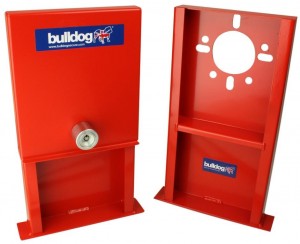
Caravan Hitch Lock

Security

There are various devices on the market which can help to protect your caravan.
  • Hitch lock
  • Wheel clamp
  • Alarm
  • Tracker
  • CRiS
Check out this useful guide to Caravan Security Devices for more information.

Insurance

Your car insurance will usually provide third party cover for towing your caravan, so would cover any damage to other cars if you had an accident. However, you would have to pay for any damage to your caravan, so make sure it’s protected against accidents, breakdown and theft with adequate insurance.

Caravan Awning

Awning

Extend your living space with a caravan awning. Our guide to caravan awnings may help you choose.

Motor mover

Caravan motor movers allow you to easily manoeuvre your caravan into position whether that be into a driveway, storage or touring pitch, or even hitching up. This guide gives more information.

Water Carrier

You’ll need to have a container suitable for collecting water to bring back to your caravan. An Aquaroll is a great option which can be rolled along the ground.

Caravan Water Container 

Water Pump

Connect your Aquaroll to your caravan taps with a waterpump. Popular brands are Whale and Truma.

Waste Water Container

Waste water, or ‘grey’ water needs to be collected by a waste water container, which plugs into your caravan waste drain points. Wastemaster is a popular brand.

Leisure Battery

Whilst most campsites will provide EHU (electric hook up), it’s still useful to invest in a leisure battery so you can power your fridge, heater and lights. There are several types of leisure battery, and all have their pros and cons, so make sure you do your research before you purchase. This guide to leisure batteries is very useful.

Gas Bottle

Power your fridge, heating, gas cooker and shower with gas. Bottles are typically butane or propane and come in 6kg or 7kg bottles. Butane gas is ideal for the summer months, but for winter, propane is better as it’s unlikely to freeze in cold weather.

Electric Hook Up Mains Lead

Mains Lead

To connect to an EHU, you’ll need a mains lead which costs around £50. Make sure it has an IP44 rating which indicates the level of protection given to sockets from water penetration.

Step

Don’t forget to pack some portable steps to make getting in and out of your caravan a whole lot easier.

Corner Steady Jack

When you pitch up you’ll need to lower your corner steadies. Wind them down with a corner steady jack.

Toilet Chemicals

Reduce unpleasant smells, break down all the nasty stuff, and keep your toilet working effectively with toilet chemicals. Pink chemicals are added to the fresh water tank to keep the flush clean and provide a nice aroma. Blue or green chemicals are put into the waste tank and break down waste matter.

Towing Mirrors
Caravan Towing Mirrors

If you’re towing a vehicle wider than your car, you’ll need towing mirrors. You can buy stick on towing mirrors, strap on towing mirrors or bracket style towing mirrors. Prices range from around £15 to about £150.

Wednesday, 16 October 2019

Caravan Security Devices & Your Insurance


Whether you’re sticking close to home or travelling on the road trip of a lifetime, fitting the proper security devices to your campervan is the best way to ensure your safety. But not only do security devices play a crucial role in maintaining your safety, but they can also have a direct impact on your caravan or campervan insurance. Many insurers advise that security options should be added to your touring vehicle, but what do these additions do in terms of your insurance? In some cases, it can have a positive impact on the price you pay.

Read on to discover more about security devices and the ways they can impact the price you pay for your leisure vehicle insurance when it comes time for renewal.

Locking devices and clamps
The most basic and classic of security devices, security locks are a common measure that many caravan and campervan owners use to avoid their vehicle being broken into or stolen when left alone. Either when travelling or on the front drive, these locking systems are just as effective either way to ensure your contents are left secure, and your tourer is kept safe. There are many different forms of locks and clamps available on the market, including:
Caravan Wheel Lock

Steering wheel locks
This classic method applies to campervans and motorhomes in the same way it applies to other on-road vehicles such as cars and vans. Typically, a steering wheel lock is placed over the wheel of the vehicle, preventing the theft of the vehicle without the ability to unlock. Some campervans now come with this feature built-in, though it depends on the exact model.

Ground anchors
A form of lock traditionally used for both caravans and campervans, these anchors all for the secure fixing of the vehicle to the floor. This method is particularly useful for times when your tourer is left at home, whether you’re at work or going on a trip abroad without it. It ensures the vehicle cannot be driven away using specialised clamps that are incredibly strong and hard-wearing.

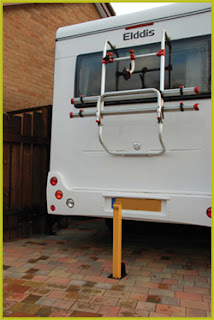
Security posts
A measure often used in commercial and retail car parks, security posts can be an excellent way to prevent a caravan or campervan from being stolen; by literally blocking the exit route. In the majority of cases, a removable post can be locked upright in front of a vehicle to prevent the caravan or campervan from getting past if stolen. These posts may be more costly as their required cementing to be useful, but they can be a highly valuable tool to prevent theft.

caravan security post
Caravan Security Post
So, what is the benefit of installing locking security measures? Beyond the obvious, the reduced risk or chance of theft, using these additional security tools can reduce the price of insurance. Some insurance companies will provide a discount for leisure vehicles that are kept in a safer location, thanks to that same reduced risk.

Immobilisers and alarms
As with any other on-road vehicle, from trucks to cars, the use of inbuilt alarms in caravans and motorhomes is a necessary feature that comes as standard with many of the more modern models available on the market. But it’s possible to do even more to prevent break-ins and theft by announcing the presence of an alarm system, via a visible device or using well-placed stickers. These can be as much of a deterrent as the alarm itself. These are the options typically available to leisure vehicle owners:

Alarms
Many tourers come with alarms as standard. As with a house alarm, these are designed to trigger if an intruder accesses the vehicle. In some cases, these alarms can be linked directly into a security company for added safety. In others and more standard models, these alarms make a great deal of noise to draw attention to potential theft.

Immobiliser
Again, like any other form of on-road vehicle, caravans and campervans often include an immobiliser device. This security tool prevents thefts should the worst happen by not allowing the vehicle to be driven unless it is unlocked first. Some modern vehicles include this as standard, while older models may require a physical immobiliser that is directly fixed to the wheels. It’s worth confirming if your caravan or motorhome includes the less physically demanding method when you purchase it, as it is a valuable feature to have.

As with the security locks and clamps mentioned above, the inclusion of a high-quality alarm and immobiliser – either included with your vehicle or added as extras – can bring down the overall cost of insurance. As these features are significant deterrents to theft, they make your vehicle less high-risk, and therefore your insurance quotes cheaper.

Other security options
In addition to alarms, immobilisers and locks, modern caravans and campervans can come with, or be equipped with, a whole host of different security devices to further reduce the cost of your insurance. Here are just a few of the additional security options that could be installed for safety, security and insurance reduction:

Tracking devices
Tracking devices are an increasingly common option for both caravans and campervans, with some insurers now offering a discount on insurance when recommended tracking devices are installed within the vehicle. These devices are not visible, discrete and easy to use, often allowing tracking either through a security company or smartphone. Should your vehicle be stolen, it vastly improves the chances of recovery – which is why it can be a great way to get a discount on your campervan insurance.

Dashcams
A less common but increasingly popular addition to motorhomes and campervans, dashcams are a vital evidence tool for insurance companies. As such, it makes sense that installing both front-facing and rear dashcams within a campervan can sometimes reduce your insurance costs, especially when it comes to being on the road for days or weeks at a time.

Choosing the best insurance for you
Picking the best campervan or caravan insurance for you means ensuring that it does everything you want it to do. But equally, you want to pick an insurance that puts your safety, and that of your vehicle, first. 


Friday, 1 September 2017

Caravan Park Security

At CaSSOA we’re all about providing secure storage for your caravan or motorhome when it’s not in use. But what about when you’re out and about on holiday?Security is still important when you’re away so here are some points to consider when leaving your tourer on a caravan park. 

  • Lock all windows, doors and skylights. 
  • Hide all valuables from view – including TVs and other electrical equipment. Remember to mark these with a UV or permanent marker so that they can be traced back to you if stolen. 
  • Consider using a floor-anchored safe. 
  • Take keys, money, credit cards and passports with you when leaving your caravan. 
  • Leave curtains open (after hiding valuables from view) so that it can be seen that there is nothing of value to steal. 
  • Consider purchasing an alarm system to alert others if your caravan is broken into.  
  • Security posts and wheel clamps can also be used when you’re away from your caravan. Visible security devices like these act as a visual deterrent.  
  • Make friends with neighbouring caravanners – they’re more likely to raise the alarm if someone unfamiliar is loitering around your caravan.  
  • Awnings can be useful – not only to add extra living space. A thief may be less likely to steal a caravan with an awning because of the time they’d need to take it down or cut it away. 
And finally, check your caravan insurance policy to see if there are any specific requirements you need to be aware of whilst taking your caravan away from its storage location.

Tuesday, 19 January 2016

Caravan Storage Options

There are a number of options when it comes to deciding where to store your caravan.

Here's our guide to the choices you have and how to choose the best secure storage for your caravan or motorhome.


Secure Caravan Stoage

Read this on the CaSSOA blog

Monday, 30 November 2015

The Caravan Industry & Security – Protecting Your Caravan

The caravan industry is an ever changing market, and with that comes developments in security as well as trends in caravan crime. Tim Booth, from the Caravan Safety and Security Group gives us a run down on what’s happening at the moment.


Looking at recent press reports it is very apparent that the Leisure Market is currently very buoyant, with both caravan and motorhome manufacturers reporting  high levels of sales. There is also a marked increase in the number of sales of European manufactured caravans.

Whenever a buoyant market for sales exists in any industry this is often seen by criminal groups as an opportunity to take advantage of a ‘high demand’ by seeking to meet this demand themselves. Of course, they achieve this supply at the expense of the current keeper or even the dealership, by stealing the caravans that they supply.

This then, is an important time of the year to make sure that you do everything you can to protect your caravan or motorhome.

Make sure that your caravan insurance cover is up to date and that you are meeting the requirements of the policy.

Of course it is not always possible to store your caravan or motorhome at your home address, due to planning conditions, and for some a lack of space – so owners increasingly turn to storage site providers.

It is a fact that many of the caravans being stolen are actually being taken from ‘informal’ storage sites – where caravans and motorhomes are just ‘parked up’ for the winter period. There are no inspections made by the site owner, or even the consumer. Many of the tracking systems fitted at time of manufacture only actually activate once the owner discovers that their property has been stolen, and then notifies the tracking company – the property can be long gone by then and chances of recovery are generally very low.

A ‘pro-active’ system will notify you if there are any issues that need to be addressed, so it is worth checking whether this is the type of system that you have – if your caravan or motorhome is fitted with such a system are you subscribed to their monitoring service?

Certificated storage sites, like the CASSOA scheme, offer the consumer a level of protection that is recognised by many insurers as a ‘positive deterrent’ to opportunist thieves. Some even offer insurance benefits for using such a facility.

Of course – if you are considering buying a caravan or motorhome, then make sure that you carry out a CRiS check on any caravan – this can tell you whether the caravan is currently stolen, or if there is finance outstanding. A HPI check can provide you with similar information about a motorhome. 

The cost of these checks could prevent you from becoming a victim of those people who choose to steal caravans and motorhomes, and then look to target unsuspecting consumers.

These straight forward measures can serve to protect your caravan or motorhome from being targeted by thieves.

Tim Booth provides specialist security advice to the caravan and leisure industry. He also works to support the National Caravan Council, The Camping and Caravanning Club and The Caravan Club by delivering an industry group called the Caravan Safety and Security Group.


Friday, 23 October 2015

CaSSOA Working in Partnership with Sold Secure

Sold Secure is a company dedicated to reducing the risk of crime by the assessment of security products through manual attack testing.

sold secure
Established in 1992 by Northumbria and Essex Police with the help and backing of the Home Office, Sold Secure is now owned and administered by the Master Locksmiths Association and works from purpose built laboratories in Daventry.

The scheme has close ties with a number of constabularies and insurers who provide regular information regarding the methods of theft and the tools utilised by criminals in their areas. This helps to maintain up to date specifications and means security products can be assessed in the light of the risk they are likely to encounter when in use

Manufacturers and suppliers can apply to have their products approved by Sold Secure. Products which have been satisfactorily assessed may bear the coveted Sold Secure Approved quality mark. Information on these approved products is circulated by Sold Secure to crime prevention officers, insurance companies, the media, the Home Office and the public, and is available free to those who require it in the form of the catalogue or via the Sold Secure website.

Steffan George, of Sold Secure says "We’re delighted to partner up with CaSSOA who we believe have the same ultimate goal as ourselves in terms of working in collaboration to reduce crime".

For more information about Sold Secure call, email or visit the website:

Telephone: 01327 264687
Email: admin@soldsecure.com
Website: www.soldsecure.com

Friday, 9 October 2015

Vermin Proof your Caravan

Prepare your caravan for long term storage to prevent vermin damage.

Caravan Magazine talks us through some top tips for keeping your caravan safe from rodents.

Mice can squeeze through tiny gaps including the plastic vents and gas drop-outs under your caravans. And if they don’t fit, they can gnaw through them.
Without blocking your vents (it’s dangerous), cover them with a piece of fine metal mesh, chicken wire doubled over, or a metallic pan scrubber, stapled firmly in place. Don’t bother filling gaps with expanding foam, mice seem to particularly love chewing through that. It’s like a mouse Crunchie bar!
  • Flush a strong detergent down your sink plug hole, as mice can be attracted to bits of food that go down the waste pipe.
  • At either side of your front locker there are usually gaps leading up the hollow pillars and into the caravan. Block these with some scrunched-up fine wire mesh netting.
  • Investigate the floor of your caravan for any tiny holes or gaps, and make sure all are properly filled.
  • Seal around all cable holes in the floor with a good quality silicone sealant.
  • Don’t leave food (human or pet) in the caravan.
  • Clean the fridge and bins thoroughly.
  • The strong smell of a used barbecue will attract mice and rats. Don’t store one in your caravan. If you do, keep it spotlessly clean.
  • Remove potential nesting materials from your caravan. Consider storing expensive sofa cushions and mattresses at home over winter.
  • Vacuum your caravan before storing it, to remove almost-invisible crumbs of food.Caravan Storage

Storing Your Caravan

  • Caravans on hard-standing are less likely to get infested than those on grass. Mice avoid areas where they are exposed such as bare hard-standings.
  • Farm storage locations are likely to have more rodents around than other options.
  • Don't give rodents an easy route into your caravan. Even sagging caravan covers can provide access.
  • Mice find their way to food and shelter by following trails of mouse urine. Consider spraying your corner steadies, tyres and jockey wheel with a Jeyes Fluid solution to eradicate these trails.
  • One option is to remove your caravan's wheels and replace them with axle-stands or 'winter wheels' when storing it through the winter. This makes the van more secure, prevents tyre damage and makes it trickier Winter Wheelsfor mice to get up to the chassis.
  • Certain scents are believed to repel mice. These include tumble-dryer sheets and mothballs.
  • Check with your caravan storage site to make sure they have a vermin control regime in place.
For more advice on preparing your caravan for storage click here.
Thank you to Caravan Magazine for this feature.
Caravan Magazine

Tuesday, 14 July 2015

Caravan Security Devices

There are a number of security devices on the market which can help deter a thief and protect your caravan or motorhome.

  • Look for the Sold Secure badge when purchasing a security device – this is the industry standard which tests and approves security products. The Sold Secure logo provides gold, silver and bronze ratings. Wheel locks can obtain a diamond rating.
  • Products can also be approved by Thatcham, or by European bodies such as TUV and SCM.
  • There are hundreds of caravan security devices on the market, with some being better than others. As with most things you generally get what you pay for so do some research before buying to check if a product has been independently tested or reviewed.

Caravan Security Products


Hitch locks


  • As well as being a visual deterrent to thieves, hitch locks fit over the towing hitch and assembly fixing bolts to prevent your caravan being towed away by a thief’s vehicle.  
  • You should look for a hitch lock that is made from heavy steel and make sure that it covers the hitch fixing bolts. It should also be noted that whilst a hitch lock does give a reasonable level of protection, it is wise to use one in conjunction with other security devices.
  • Hitch locks should not be fitted during transit as it may cause problems for the Emergency Services.
  • Some insurance companies will require that a hitch lock and wheel clamp to be fitted to a caravan as a condition of your policy.


Wheel clamps


  • Wheel clamps work in a similar way to hitch locks and are quite often required as the minimum form of security by caravan insurers. These fit over the wheels to prevent them from rotating and will prevent the caravan from being towed away.
  • Some clamps leave the unit’s wheel nuts exposed meaning the clamp can be removed by removing the wheel, so it might be worth using locking wheel nuts alongside the clamp.
  • Wheel clamps come in various sizes and not all are suitable for alloy wheels so make sure you get the right type and size for your caravan.
  • Remember to consider the strength of the material the device is made of and the lock. A wheel clamp made of thick high-grade steel is worthless if secured by a cheap lock that can be defeated in a minute.


Wheel stands/winter wheels


  • Wheels can be taken off your caravan whilst in storage and replaced with wheel stands. This should make it more difficult for a thief to drive off with your unit. However, make sure you check your insurance policy – if it stipulates the use of a wheel clamp of wheel lock, using wheel stands would invalidate your insurance.


caravan security postSecurity posts


  • Security posts are concreted into the ground and used to anchor the caravan to the spot with a heavy duty chain and padlock.
  • For maximum protection the posts need to be set in concrete and have an internal locking mechanism, as padlocks can be vulnerable. Some posts have towballs on top so the caravan hitch can be locked on top, but in general most posts will just physically stop the removal of the caravan.


Miscellaneous locks


  • Corner steady locks allow the corner steady legs to be locked in the down position. They are easy to fit, relatively cheap, and are a good addition to an existing basic security system.
  • For motorhomes, steering wheel locks are a good visual deterrent.
    caravan locks
  • Caravan and motorhome door locks are not generally very robust security and can be supplemented with additional locks or fitted with a more secure locking mechanism. There are also devices that bolt onto the body of the caravan and swing across the door to protect the door lock.
  • Remember to make sure that you are still able to easily exit the vehicle in an emergency.


Caravan alarms


  • From small alarms which can be fitted to doors and windows, to devices which have sensors to detect corner steady vibration or internal movement, there are a range of caravan alarms available to provide you with warning should someone attempt to steal or gain access to your caravan.
  • Do your research to make sure the alarm is reliable – false alarms are a nuisance and risk being ignored if there is a genuine incident.
  • Some caravan alarms can be connected to home alarm systems, and similarly, some can be linked up to a tracker device if you have one fitted.
  • Immobilisers
  • Caravan immobilisers bolt the wheels to the axle preventing the caravan from being towed away without first being unlocked.


CRiS


  • The Caravan Registration and Identification Scheme (CRiS) is a national register for caravans in the UK and provides registration documents similar to the DVLA for motor vehicles as well as information relating to the history of the caravan.
CRiS
  • All UK caravans manufactured since 1992 are automatically given a CRiS number which is etched onto the body of the van. It is also possible to register pre-2002 caravans and imported caravans.
  • In the event that a stolen caravan is recovered or sold on, a CRiS number will allow the owners to be contacted. When purchasing a used caravan, buyers are advised to contract CRiS to confirm that the unit has not been registered as stolen.
  • Remember not to keep your registration documents in the caravan – store them in a safe place at home.


caravan markingCaravan Marking


  • The roof of your caravan can be marked with the last 6 digits of its CRiS number. It is also recommended that fixtures and fittings are marked with an ultra-violet pen. Microdot security systems are also available.


Tracking systems


  • GPS Tracking devices are installed inside the caravan and linked to a central database. Should your caravan be stolen, your vehicle can then be tracked by the control centre, located and recovered.
  • Some tracking systems will automatically send out an alert whilst a theft is in progress, and those with VHF signal technology work even if your vehicle has been moved into a container or stored underground.
  • Having a tracking system installed can reduce your caravan insurance premium, but it is important to find out whether you are required to get it professionally installed. Most require a Thatcham or Sold Secure approved tracking system. 
  • Whilst these systems can be pricey they seem to provide good results. Leading manufacturers include Phantom and Tracker.


And finally…


Whilst no product can guarantee that your caravan won’t be stolen, security devices will help to deter or at least slow down a thief. Fitting more than one security measure is worth considering.

When your caravan is in storage it is worth removing personal items and leaving the cupboards open so the thief can see there’s nothing of value inside. You might also want to remove the unit cushions, which will not only keep them dry but dramatically reduce the saleability of the caravan in the event of theft.

If the worst happens and your unit is stolen notify the police, your insurance company and CRiS. The police will need as full a description, your CRiS or chassis number, any other serial numbers and identifying marks or features. Make sure you have recorded these and stored them in a safe place. It’s also worth taking some photos that can be used in the event of theft.

Read this post on our website 
Search for a CaSSOA accredited storage site here 


Monday, 6 July 2015

Home Security

With the summer now upon us, at some point it’s likely we’ll be leaving our homes unattended whilst we go away on holiday. Getting away should be an enjoyable and relaxing experience, not spoilt by worrying about the risk of burglary.

We’ve probably all asked ourselves “Did I shut that window” or “Did I switch the alarm on” at some point, so with the help of The Crime Prevention Website, here is a checklist of things to do before you head off on holiday. 

With around 60% of all burglaries taking place when no-one’s at home, these tips may help to prevent a break in whilst you’re away.

·         Let a trusted neighbour or friends know that you’ll be away. Leave your contact details, a spare set of keys and the PIN for your alarm.
·         Cancel the papers and any other regular deliveries.
·         If you have an alarm, let them know you’ll be away and who to contact in case of emergency.
·         If you’re going away for an extended period, use the Royal Mail’s Keepsafe service. They’ll hold your mail for up to 2 months.

Ask a friend or neighbour to do some of these:

·         Draw the curtains daily
·         Switch lights on and off, or use a timer switch
·         Water plants
·         Take in the mail
·         Leave one of their cars on your driveway

Secure and lock away the following:

·         Garden and DIY tools – especially ladders which could be used to aid access.
·         Sheds, outbuildings and garage
·         Garden furniture and barbeques
·         All doors, windows and gates
·         Remove items of value in view from your car if you’re leaving it at home, and put car keys in a safe place away from the front door
·         Remove all keys from all locks and put them in a safe place. Tell your key holders where you’ve put them
·         If you have a safe, use it to store valuable jewellery, documents and other valuables including wills, house deeds, and credit cards you’re not taking with you
·         Large items of value like computers or paintings should be hidden from view.

Additional things to consider:

·         Turn off the gas and water supply if you’re going to be away from a long time
·         Check the expiry dates for car, home and holiday insurance, road tax and MOT. You don’t want it to expire whilst you’re away
·         Don’t leave an answer machine message which indicates that you’re away on holiday
·         Unplug all electrical items which don’t need to be on
·         Check that outdoor security lights are working
·         Mark valuable property so that it can be identified if stolen
·         Carry out a Home Security Assessment to identify areas of your home where you may need to improve security
Having ticked off all the items on this checklist all that’s left to do is hitch up the caravan and head out onto the open road.

If you’re having a break from touring and leaving your caravan behind, check our guide to Caravan Security.

Happy Holidays!

Read this on our website

Monday, 19 January 2015

Keeping your Caravan Safe

In recent years the level of reported thefts of touring caravans has reduced substantially, however that is of little consequence to those who become a victim of this type of crime. As a caravan owner it is important to make sure that you do all that you can to protect the security of your caravan, which after all for many is a substantial investment. Tim Booth, from the Caravan Safety & Security Group has some useful advice.

A number of touring caravans have recently been reported as having been stolen in the Derbyshire area. Many of these were from storage that was being provided at farm locations.

The most important consideration when seeking to protect your caravan is to make sure that you meet the standards required by your insurer – you do not have to insure a caravan but of course if you decide to then there will always be policy conditions. Most insurers require you to fit a hitch lock and wheel clamp – but you have to consider whether this is enough.

A caravan stored at an ‘informal’ farm location is often vulnerable as any offender can spend time defeating security devices that you have fitted. So, you need to consider the storage site security. 
  • How easy is it for you to collect your caravan? 
  • Is there security in place?
  • Is the storage area a fenced and gated area? 
  • How often have you been ‘challenged’ when collecting your own caravan – or do you have to arrange collection with the storage provider?


If it is very straightforward for you to drive in and collect your caravan, if it is then the same applies to someone seeking to steal your caravan.

How often do you check your caravan? Many operators provide storage, but there is no check of your property once it is parked there – does the storage agreement include checks by the operator? – If not then you need to make regular visits (some of the caravans stolen have not been seen by their owners for a number of months).

If your caravan has an alarm system then make sure that it works – alarms will serve to both deter offenders and attract attention – but if the caravan is in the middle of nowhere then it is unlikely that there would be any response to such an activation.

If your caravan has an after theft recovery device fitted then make sure that you have paid the subscription for the monitoring (many insurers provide a benefit for using these devices – but failure to pay the subscription may leave your insurance invalid).

Some systems can only be activated once the caravan has been stolen – so this may be some considerable time after the event – so the value of such a product may not be as good as you may want to see. There are pro-active devices available – again these offer a benefit with many insurers – the real benefit here is that, if the alarm is linked to a monitoring device, then the alarm activation will be reported to you, and then action can be taken to investigate what is wrong – these systems can also provide live updates of the caravan’s location, enabling an early recovery in the event of a theft (these recoveries on some occasions have been within the hour – so your caravan and the contents are still together).

If you leave ‘caravan’ equipment in your caravan when it is stored then it is a good idea to mark this with your postcode. Not only does this protect your property when you are using the caravan on a site, but it also provides permanent identification of this property should any offender seek to sell, or dispose of the contents of the caravan, after the theft.

A permanent marker pen is ideal for this – one that leaves a mark that you can see, not the ‘hidden’ UV marker. You may also mark the inside of your caravan with the last six numbers of its VIN – its unique identification mark found on the windows. Repeating this mark inside cupboards / lockers within the caravan can help to identify it if the offender works to remove the identification provided by the manufacturer.

Registering your caravan with the CRiS scheme (the UK Central Registration Identification Scheme) can also help the Police to identify your caravan. This is a register of keepers and in the event of a theft then previous keepers can provide information to officers about unique features of the caravan that you previously owned. Introduced back in 1992 the scheme can now provide you with covert identification tags that can be hidden around the caravan. These electronic tags can be read by a special reader that is available to Police officers – so even if the manufacturer’s identification marks have been removed the caravan can still be identified.

To locate secure storage site for your caravan or motorhome, click here.

Read this on our website

Protect your Caravan with CRiS

CRiS (the Central Registration and Identification Scheme) is the National Register for caravan owners in the UK working towards preventing and detecting caravan related crime.

Established in 1992 by the The National Caravan Council, CRiS provides registration documents similar to the DVLA for motor vehicles and maintains information relating to the history of the caravan.

A CRiS check will:
  • show if a caravan has ever been written off by an insurance company,
  • show if a caravan is subject to any outstanding finance,
  • provide details of the current registered keeper, and detail how many owners there have been in the past,
  • confirm the make, model and age of a caravan.
All new caravans will be given a unique 17 digit Vehicle Identification Number (VIN), which is recorded onto an electronic tag and embedded into the bodywork of the caravan, and etched onto the windows. It will also be recorded in the Touring Caravan Registration Document which is kept by the registered keeper of the caravan.

If you are buying a new caravan, the dealer will register the van and you will receive a CRiS certificate shortly after. If you already own, or are considering buying a caravan which was manufactured prior to 1992 when CRiS was established, and therefore does not have a VIN, you can apply for it to be CRiS registered.

If you are looking to buy a used caravan, the CRiS number is really useful in preventing you from purchasing a stolen caravan, or one which has finance outstanding on it. Simply call CRiS with the number which has been etched onto the windows (or stamped on the chassis), and for a small fee they will make sure that the number matches the caravan make and model on their register. It is also advisable to ask the seller for their CRiS registration documents.
Whilst it is highly recommended that you do carry out a full check, you can decode the CRiS number yourself.

Here’s a quick guide:

Say your CRiS number is SGET000EX9AVA5009: 
  • The first two characters represent the country of manufacture. SG = United Kingdom
  • Second character is the make of the caravan. E = Elddis
  • Third character represents the number of axles. T = twin axel (s=single)
  • The next three digits are for optional manufacturers data, like the caravan model.
  • The eighth & ninth digits show the make of the caravan. EX = Explorer (known as Elddis)
  • The tenth digit is the year of manufacture. 9 = 2009
  • The final digits are the caravan’s serial number = AVA5009
Please note that the caravan build seasons runs from 1st September to 31st August. This means that a caravan which was built between 1st September 2010 and 31st August 2011 will have a manufacture year code as B for 2011.

For reference, here is complete list of VIN codes: 
Manufacturer codes:
AB = ABI 
AD = Adria 
AV = Avondale
BE = Bessacarr (later built by Swift so will use the SW code)
BU = Buccaneer (later built by Explorer Group so will have code EX)
BY = Bailey 
CL = Carlight 
CM = Coachman 
CP = Compass (could have EX code as were built by Explorer Group) 
CS = Cosalt (later Abbey’s were built by Swift and so will use SW code) 
CU = Sprite (later Sprite’s were built by Swift and so will use SW code) 
EL = Elddis (may carry the EX code, as Explorer Group re-branded to Elidds)
EX = Explorer Group (now known as Elddis) 
FL = Fleetwood 
LU = Lunar 
SW = Swift Group 

Build year codes:
N = 1992 P = 1993 R = 1994 S = 1995 T = 1996 V = 1997 W = 1998 X = 1999 Y = 2000 
1 = 2001 2 = 2002 3 = 2003 4 = 2004 5 = 2005 6 = 2006 7 = 2007 8 = 2008 9 = 2009 
A = 2010 B = 2011 C = 2012 D = 2013 E = 2014

If you’re struggling to decode your CRiS number, here’s a tool that will automatically do it for you:http://www.caravanvindecoder.com/

For more information about CRiS, visit https://www.cris.co.uk/secure

Read this on our website